
Why it’s worth it
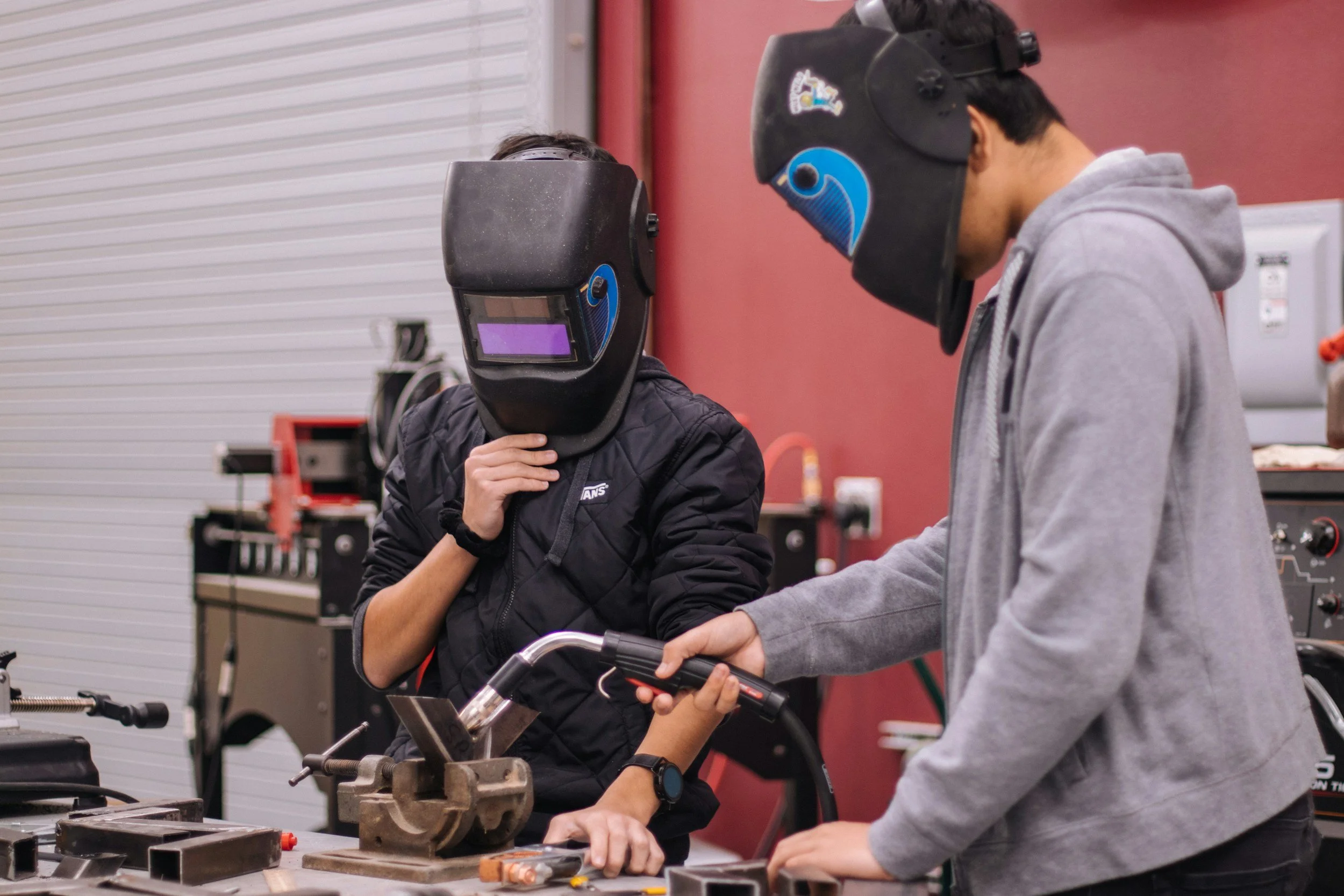
Humans are designed to think, to work, and to create, and the abilities that support those functions look different for each of us. We firmly believe that the cognitive skills of the plumber are just as valuable as the skills of the professor.
Different, not better.
When we have opportunity to utilize the gifts that come more easily to us, we aren’t fighting against our nature, but working with it.
In building toward the future, knowing what tools with which we’re equipped helps us set a firm foundation for the work we choose to pursue.
Click below to explore more.
So, what are your thoughts on school?
If you’re anything like the hundreds of students we’ve taught over the years, you may have thought:
School consumes all my time.
I love learning, but I could do with fewer tests.
Why are we learning things we’ll never use?
I’m actually great at school!
I’d learn more if I wasn’t just sitting and listening all day.
Sound familiar?
We all have opinions about school, and even if those feelings are negative, we still believe that learning is for everyone.
While school may come easily for some of you, for others, there’s a good chance you haven’t been taught in ways you actually learn best, and your unique abilities just don’t shine through typical tasks like writing an essay or solving a chemical equation. That doesn’t mean one is better at learning than the other.
Do you find enjoyment in creating? In working with your hands? In solving problems? In sharing an idea with others? Most people pursue work that they believe they’re good at or at least interested in. While interest and skills are an important part of choosing a profession, most people don’t know why they’re good at a particular task.
Understanding how you’re wired is understanding how you were uniquely created, and what you’re driven toward. When we pursue work that really fits with how we’re made, we tend to feel more fulfilled and to be more successful.
It’s our mission to help students see that how they’re gifted is good, and who you are should direct what you pursue, not the other way around.
Students
Frequently Asked Questions
-
We believe learning is for everyone, but how you learn best, and what you’re drawn to is unique to you. There are so many fulfilling and successful careers that do not require a college education.
-
Gaining insight to how your mind works, and how you prefer to engage with others is a really important first step to deciding what you want to study. Do you like being the expert, or do you prefer to work alongside others? Do you have lots of ideas you can’t wait to share, or would you rather work carefully at a task someone gives you?
College is here to serve you; developing the confidence and clarity to choose a direction to pursue that is best fitting for you starts with understanding your natural gifts and proclivities.
-
Knowing what you want and don’t want for your life is important! Whether you make decisions based on an interest (ie, I really love science), a particular value (ie, I want to be my own boss), or an ability (ie, I’m a great public speaker), there’s usually more than one piece of the puzzle to consider.
While there are many careers that don’t require a college degree, navigating what type of work fits your values, interests, and abilities can be complicated. You likely know some of your strengths, but taking our test gives an eyeopening look at the way your abilities and preferences combine.
We are in the business of listening to what you want, but also helping you really see how you’re wired. Being best informed about different careers that align with your goals and interests, and spending time thinking through those options together is key to finding a fulfilling career.
-
Deciding what to do after high school is one of many big decisions you’ll make in your life. Such a big decision requires thought, discussion, and some homework. Taking time to consider what you want your life to look like starts with understanding your interests, values, and what you’re naturally gifted to do. College is a tool for you when you’re ready for it.
-
The Highlands Ability Battery is not like a typical school test; there’s no need to study or prepare (yay), and there’s no way to fail! It’s a series of puzzles and tasks you complete online in a set amount of time. Some of the tasks will be challenging, others you will find easy-that's the science of the test at work, determining what comes quickly to you, and what takes a bit more effort. We promise it’s worth it!
-
We love to hear when students have a clear direction! Whether you have experience with what you want to pursue, or simply a strong passion, exploring particular careers in light of your actual abilities and areas that may need support can help you move forward with a clear knowledge and confidence for the journey ahead. So many people pursue careers that meet their interests and values but that they aren’t suited for. A recent poll shows global employee engagement is at 20%; when a job doesn’t fit, we tend to be disengaged.
Taking the time to explore who you are and how you fit with the work you want to pursue is really important for your success.


Most high school graduates choose a career path before they have worked their first job, and often invest in a future driven primarily by a piqued interest and the allure of success, all at the ripe age of 18.
With the rising cost of higher education, and a continuously changing career landscape, the price of making an ill informed investment can be costly both in time and resources. Just like you wouldn’t buy a house without a thorough inspection, you shouldn’t choose a career path without doing your homework as to what best fits.
And for those who aren’t sure they want to pursue higher education, figuring out next steps can be just as overwhelming.
Parents
Average cost of a 4 year in-state public college education: $120,000
Average student loan debt: $40,000
Average income for graduate of 4 year college: $60,000
Cost aside, sending your child out to take on the world is a big transition for both of you. You are launching them to make decisions on their own, and to direct their own futures; that’s a good thing for them, but it can also be intimidating for both of you!
Equipping your child with the knowledge of how he is uniquely made, and walking with him to explore how his gifts fit with his goals and values, is an investment in confidence and training to mindfully make decisions, set goals, and navigate values, giving both of you the assurance and confirmation that you’re ready to launch.

-
We believe that learning is for everyone, but that everyone learns differently. College can be a valuable experience for many people, academically and socially, but it is important to consider what you’re investing in. It’s good to ask the question: how will this serve me? This is why we discuss values, goals, and interests in making a major decision like pursuing higher education. There are many paths to take to build a fulfilling and successful future; having an honest and complete look at all the variables is a wise first step.
-
Our world is constantly changing, but so are we! The more we know about ourselves and the world we live in, the more confidently we can face our future.
Success looks different for many of us. We believe we were created to work, and that we find greater fulfillment in work that aligns with our abilities, not against them. If you’re driven to work with your hands but required to sit at a desk, you’re not likely to feel fulfilled nor be very successful.
Our goal for students is to strengthen their confidence and agency by knowing who they are and how their minds work.
We can’t control the world, but we can prepare to meet the challenges and changes of the world with steadiness and strength as we utilize the tools we’re made with.
-
Research has shown that cognitive abilities stabilize around the age of 14. We want you to gain the most out of your investment so we recommend students be tested when they show interest in taking steps to learn about themselves, and have the maturity to take the process seriously, typically around the age of 15-16.
-
Actually, no! Research has show that abilities as we define them are stable and develop naturally by the age of 14 or 15. At that point, they remain, essentially unchanged, throughout the rest of life. Skills can be added and studies can be modified, but natural abilities are constant. Clients will take the test once, but have valuable knowledge that will last a lifetime.
-
Grades and standardized test scores represent a convenient means by which schools measure and qualify students. However, they are more representative of skills and level of learning than of true abilities.
A child who struggles with reading, may have a strong ability to remember anything she hears. A child who doesn’t think linearly, may be really quick to see commonalities in seemingly unrelated objects. The ability to think in 3D is a key trait for an engineer, but is not something we assess on a high school test.
Having our abilities assessed with an objective and science based tool is like having a custom made garment when we’ve been wearing-one-size-fits-most all our lives.
Our assessment also provides valuable insight into our dispositions toward work environments, how we communicate, and our preference for making decisions and seeing results.
-
Yes! Our abilities assessment combined with student-specific feedback and coaching is of special importance to students who feel they don’t have identifiable special talents. Why? Because the measures we use to determine “what we’re good at” tell us very little about ourselves.
An abilities assessment and interpretation by a trained consultant reveal so much more about a person-how they solve problems, how they learn best, what work environment is right for them, whether they have measurable musical talent, and how they relate to and are perceived by others. Our whole person approach is really positive, and seeks to build people up as they recognize their unique gifting, and gain confidence in their abilities and decision making.
-
Our primary assessment is the Highlands Ability Battery (HAB). The Highlands Company has not conducted formal research on how conditions such as ADHD, autism, dyslexia, language-processing challenges, or other learning differences may affect HAB results. We do recognize that neurodiverse individuals often have unique cognitive processing styles that may influence how they approach certain worksamples on the test.
For example, individuals with language, comprehension, attention, or processing-speed challenges may find some timed tasks more difficult.
That said, many certified Highlands Consultants who work with neurodiverse populations have found the HAB to be highly valuable for identifying strengths, patterns of thought, and areas for development.
We would love to talk with you more to determine if our assessment is the right tool, or whether another assessment may better serve your child’s needs.
Frequently Asked Questions

A recent Gallup poll found that only 31% of the US population is engaged in their work, and only 34% said they have the opportunity to “do what they do best.” While there are other variables at play, there seems to be a clear connection between engagement and work that fits what we are made to do.
Have you ever felt a sense of satisfaction when you’re able to fix something that’s broken? When you get a chance to share an idea? Even when you listen to music? These are all indicative of how you’re wired! When we participate in work that is fitting to our abilities, we find satisfaction and are more engaged; if the work aligns with our interests and our values, even better!
Whether you’re burnt out, have found yourself in a new stage of life, or just interested in learning more about how you think, work, and communicate, we’re here to help. When we take the time for introspection, we can learn so much about who we are, and begin to find value in work that honors our unique abilities.
Adults

-
Anyone interested in learning and growing personally or professionally can benefit from our program, like
Individuals just entering the workforce
Retirees considering next steps
Entrepreneurs and business owners who want to make best hires
Business leaders who want to invest in their employees
Career professionals looking for a change or growth
Individuals in life transitions re-entering the work force
-
The HAB consists of 19 virtual work-samples that are taken online over an estimated three hours in total. You do not have to take the whole Battery at once.
The work-samples are 3-12 minute puzzles and tasks that measures basic human abilities such as:
After you complete all 19 work samples, you will receive customized reports that provide insights into how you think, what makes you tick, and where you will thrive.
Your results are revealed in an individual analyses report of more than 30+ pages.
-
The HAB is unique in that it measures your abilities based on performance rather than perception. Exercises such as recreating designs from memory, manipulating blocks in space, and putting images in logical sequence are some of the virtual tasks you are asked to perform within a set amount of time. Results based on timed performance are far more reliable than results based on self-perception or personal opinion.
Frequently asked questions
Curious if a change is the right move? Click the box below to download your free guide to help start thinking through next steps!